Professional Mold Remediation in Tukwila, WA
If you can see or smell mold, the problem is usually bigger than what is visible. Mold grows behind drywall, under flooring, inside wall cavities and in crawl spaces where water was never fully dried. We provide mold remediation in Tukwila that fixes the cause, not just the stain: we find the moisture source, contain the area, filter the air, remove contaminated materials safely and treat the structure. Call (206) 864-5955 to schedule; our line is answered 24/7.
- IICRC S520 mold remediation standard
- EPA mold guidance
- Local South King County crew
- Open 24 hours, 7 days a week
How Soon Does Mold Grow After Water Damage?
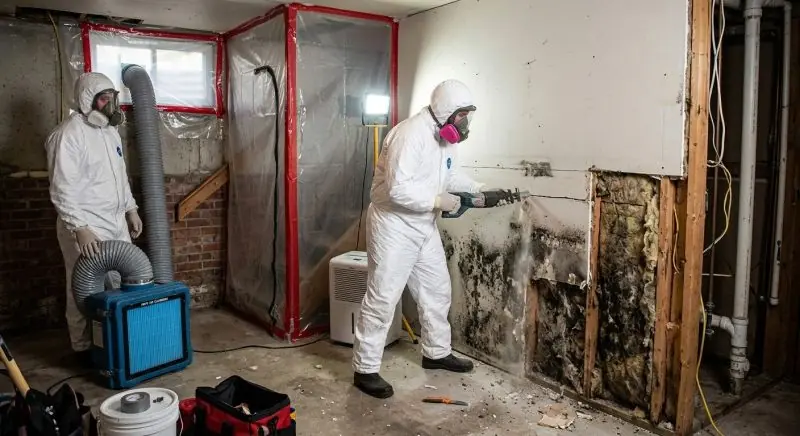
Mold can start growing on wet drywall, wood, carpet and insulation within 24 to 48 hours. Extracting water and drying the structure within the first day is the best way to prevent it.
| Time after water damage | What happens |
|---|---|
| 24 hours | Mold spores on wet surfaces start to germinate; nothing visible yet |
| 24 to 48 hours | Growth begins on wet drywall, wood, carpet and insulation |
| 3 to 7 days | Visible mold appears; hidden growth behind walls and under floors is likely |
| 1 week or more | Mold spreads to nearby materials, musty odor gets strong, sensitive people may react |
If you had a leak or flood more than two days ago and it was not professionally dried, mold may already be growing where you cannot see it.
Signs You Need Mold Removal in Tukwila
- A musty or earthy smell that does not go away with cleaning
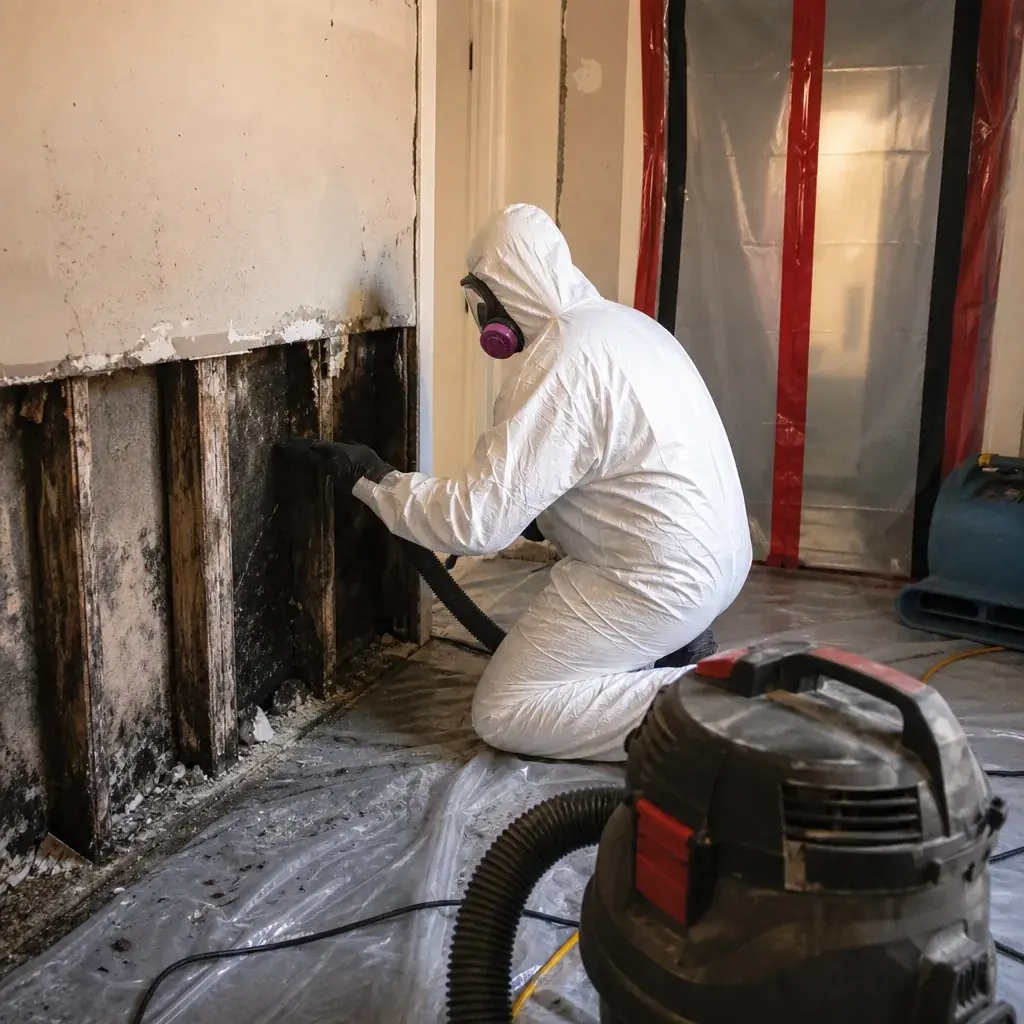
- Black, green or white spots on drywall, ceilings, baseboards or window frames
- Mold on bathroom grout, around the tub or on the ceiling above the shower
- Allergy-like symptoms indoors that ease when you leave the house
- A past leak, flood or sewage backup that was never professionally dried
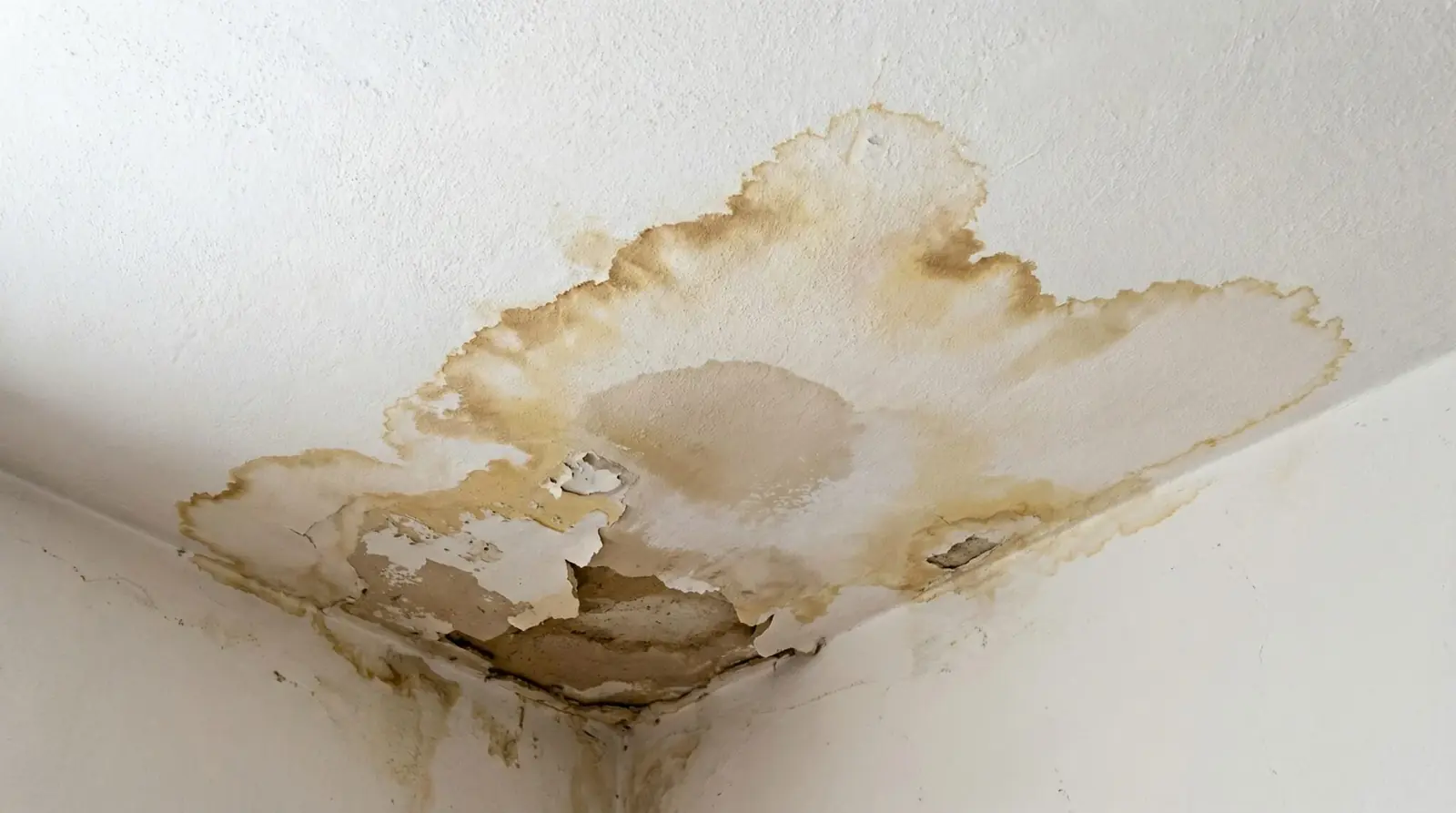
- Peeling or bubbling paint, or dark staining with no visible water source
Mold removal in Tukwila should always start with finding the moisture behind the growth. Do not scrub, spray or tear out moldy material before the crew arrives; that spreads spores through the house.
Our Mold Remediation Process
- Find the source: moisture meters and thermal imaging locate the growth and the water feeding it. An active leak or wet crawl space is addressed first.
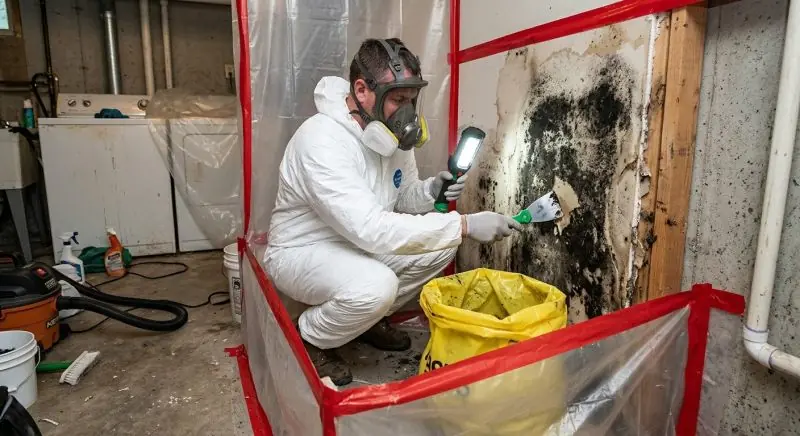
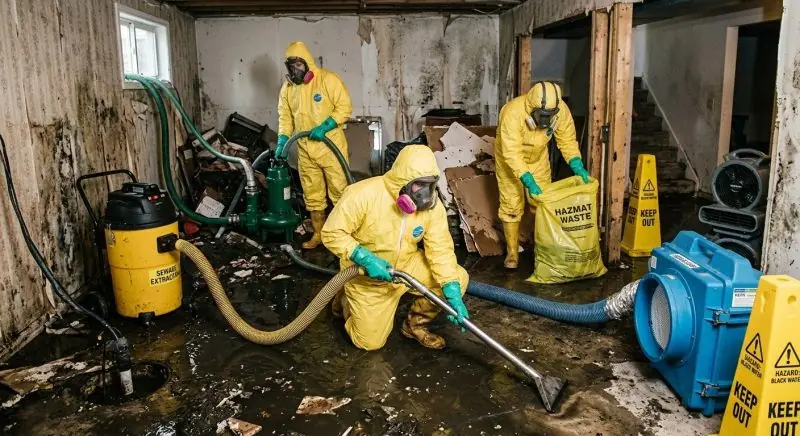
- Contain: plastic barriers and negative air pressure seal the work area so spores do not reach clean rooms.
- Filter the air: HEPA air scrubbers run continuously inside the containment.
- Remove: moldy drywall, insulation, carpet and pad are cut out and bagged inside the containment. Framing is cleaned and HEPA vacuumed.
- Treat: antimicrobial goes on exposed studs, joists, subfloor and sheathing.
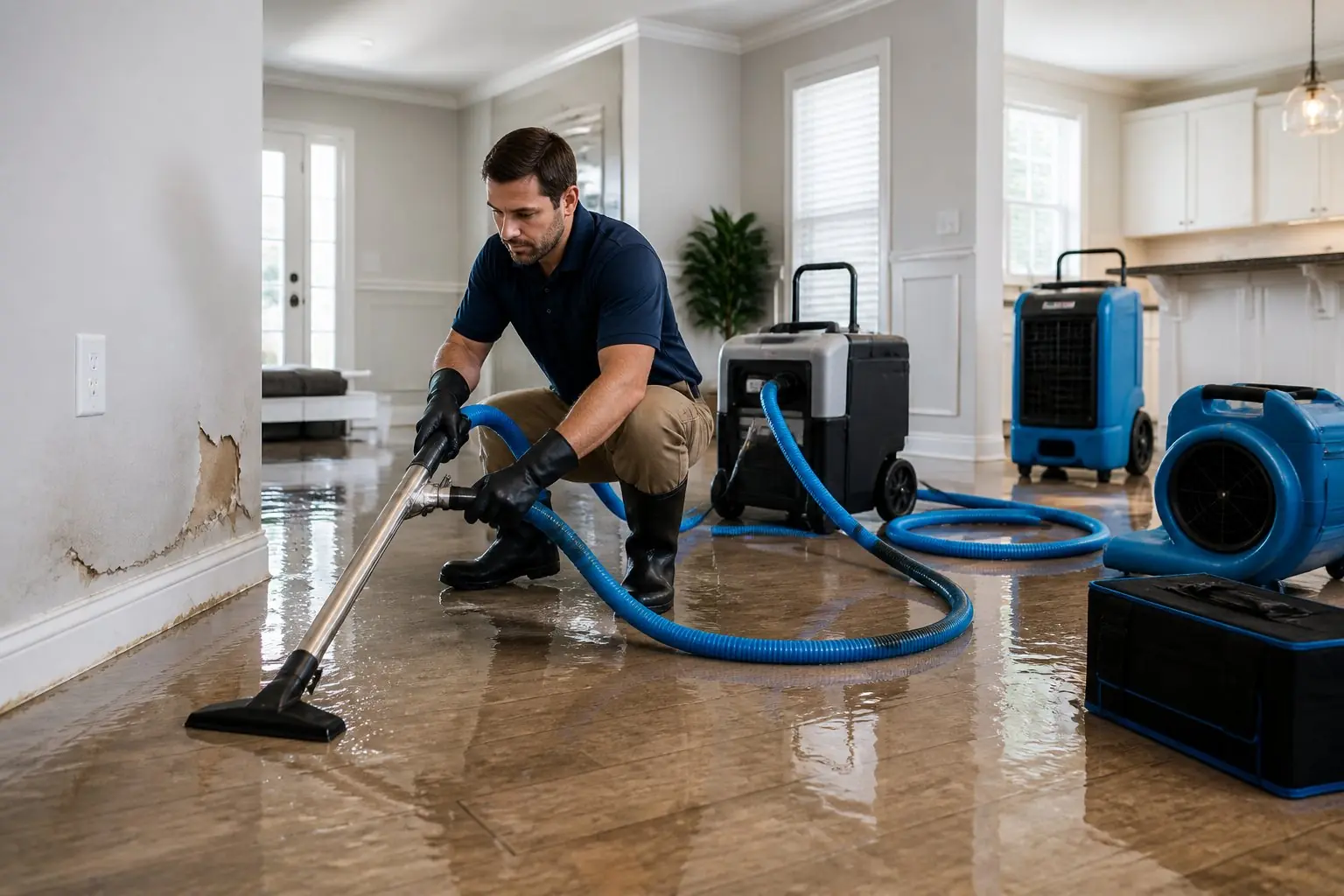
- Dry and fix the source: the area is dried to normal moisture levels, and we identify the leak, crawl space water or ventilation problem that needs repair.
- Clearance: the area is checked before containment comes down; independent air testing can be arranged when your insurer or you want it.
Black Mold Removal in Tukwila
"Black mold" usually means Stachybotrys chartarum, which grows on drywall paper, ceiling tile, cardboard and wood that have stayed wet for about a week or longer. It looks dark green to black and often slimy. Many other molds are also dark, so color alone does not tell you which one it is. What matters is that black mold means water has been there a while, so hidden damage around it is usually larger than what shows. Our black mold removal in Tukwila follows the same containment and removal steps for any significant growth.
Is Mold Dangerous? Can You Stay Home?
Mold affects people differently. Common reactions include congestion, sneezing, itchy eyes, coughing, headaches and worse asthma. Infants, older adults, people with asthma or allergies and anyone with a weak immune system are most sensitive.
You can often stay home when mold is limited to one area and properly contained. When mold is in several rooms or the HVAC system, or someone in the home is very sensitive, staying elsewhere until clearance is safer.
Where We Find Mold in Tukwila Homes
| Location | Why mold grows there | What you notice |
|---|---|---|
| Behind drywall after a leak | Wall cavity stayed wet after the surface dried | Musty smell, peeling paint, dark shadow |
| Bathroom walls and ceiling | Daily shower moisture, weak ventilation | Black spots on grout and ceiling |
| Crawl space joists and subfloor | Standing water, groundwater, failed vapor barrier | Musty first floor, soft floors |
| Attic rafters and roof deck | Roof leak, condensation, fans venting into the attic | Musty upstairs, ceiling stains |
| Under kitchen and bathroom sinks | Slow supply or drain leak | Musty cabinet, warped base |
| Around windows | Condensation on older windows | Black spots on frames and sills |
| Behind the washing machine | Slow hose or drain leak | Musty laundry room, wall stains |
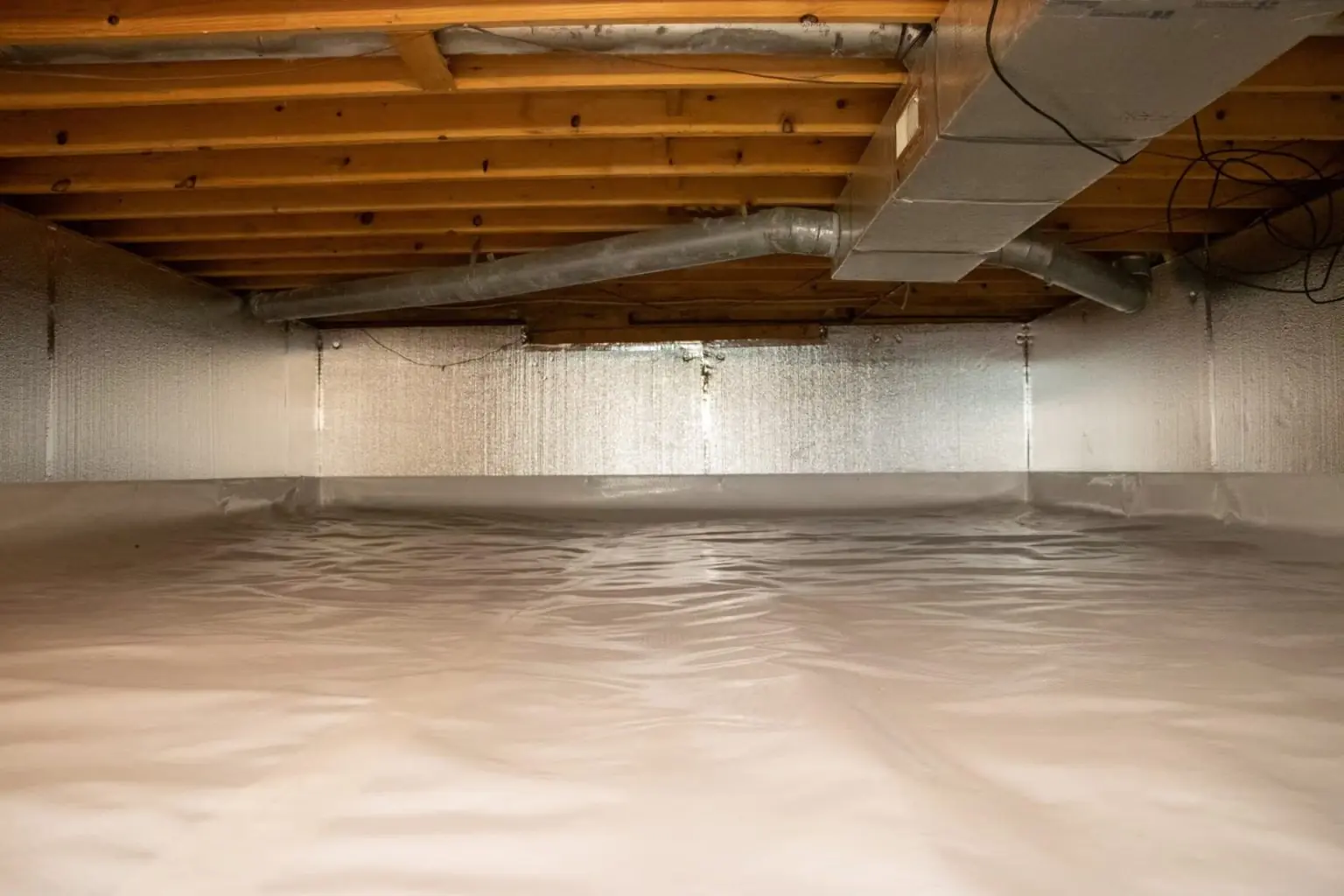
Crawl space moisture is one of the most common causes. Standing water under the house is removed first; see Crawl Space Water Removal.
What Not to Do With Mold
- Do not use bleach on drywall or wood. It can lighten the stain without removing growth in porous materials, and it adds water.
- Do not tear out moldy drywall without containment. It sends spores through the house.
- Do not paint over mold. It keeps growing behind the paint.
- Do not point a fan at mold. It blows spores into other rooms.
- Large areas need professional help. EPA guidance suggests professional remediation for growth larger than about 10 square feet.
Why Mold Follows Water Damage
Most mold jobs trace back to water that was not dried properly: a roof leak patched but wet insulation left in the attic, a basement pumped out with a shop vac but never dried, a washer hose dripping behind the wall for months, or a crawl space that floods every winter. Water plus time equals mold. Fixing the mold without fixing the moisture means it comes back.
Mold Remediation vs. Mold Removal
Mold spores exist naturally in every home, so no one can remove all mold. Mold remediation removes contaminated materials, treats the structure and fixes the moisture so mold stops growing and indoor levels return to normal.
How Much Does Mold Remediation Cost in Tukwila?
Most mold remediation jobs in the Tukwila area run from about $1,500 to $6,000. A single bathroom wall or small area sits at the low end; a crawl space, attic or several rooms sits at the high end, and very large jobs can cost more. These are typical ranges, not quotes; you get a written scope after inspection.
Does Insurance Cover Mold Remediation?
It depends on the cause. Mold from a sudden, covered water loss like a burst pipe or appliance failure is often covered with the water claim. Mold from long-term leaks, humidity or known moisture problems usually is not. Many Washington policies cap mold coverage at a set amount, often a few thousand dollars up to around $10,000. We document the source, the affected area and the work for your adjuster.
Mold Remediation Across Tukwila, SeaTac and Burien
We remove mold across Tukwila, including ZIP codes 98168, 98178 and 98188. Crawl space mold is most common in Allentown, Foster and along the Duwamish; bathroom and attic mold shows up across every neighborhood, especially in older homes where fans vent into the attic. We also serve SeaTac and Burien.
Frequently Asked Questions
A musty smell that does not go away is the most common sign. Others are visible spots, peeling paint, staining with no water source and allergies that worsen indoors.
Any significant mold can cause allergy and breathing problems, especially for sensitive people. It should be removed safely whatever its color.
Small surface mold on tile, glass or metal can be cleaned. Mold on drywall, wood, carpet or insulation needs containment and removal.
On non-porous surfaces like tile, it can. On drywall and wood, it does not reach the growth inside and adds moisture, so mold comes back.
Not if the moisture source is fixed. If the leak or wet crawl space continues, mold will return.
Small contained jobs take 1 to 3 days. Crawl spaces, attics or several rooms take 3 to 7 days.
Call (206) 864-5955. We use moisture meters and thermal imaging to find hidden moisture behind walls, under floors and in the crawl space.
Areas We Serve
Request Fast Mold Service
- IICRC S520 mold remediation standard
- EPA mold guidance
- Local South King County crew
- Open 24 hours, 7 days a week